

SCHOLARSHIP APPLICATION: (Deadline: APRIL 30th, 2027)
Please ensure all fields are filled in completely.To view previous winner: Click Here
(IF YOU HAVE ANY QUESTIONS, PLEASE EMAIL THE PROGRAM ADMINISTRATOR AT RYAN@STUDENTSCHOLARSHIPS.ORG)
Forklift Throttle Body
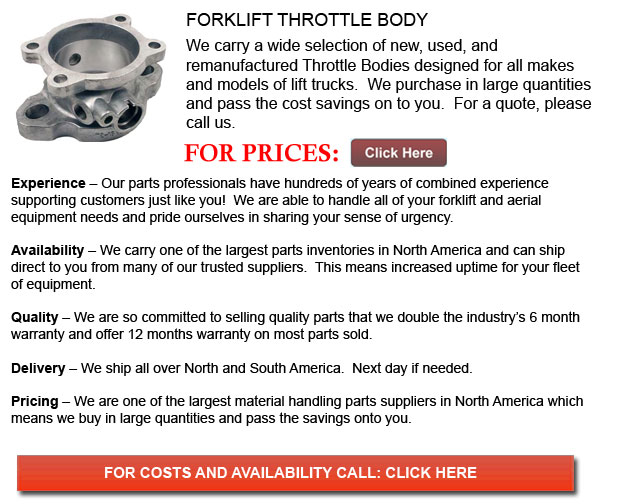

Throttle Body for Forklift - The throttle body is a component of the intake control system in fuel injected engines to be able to regulate the amount of air flow to the engine. This mechanism works by putting pressure upon the driver accelerator pedal input. Usually, the throttle body is positioned between the air filter box and the intake manifold. It is normally connected to or positioned next to the mass airflow sensor. The largest piece in the throttle body is a butterfly valve referred to as the throttle plate. The throttle plate's main function is to be able to control air flow.
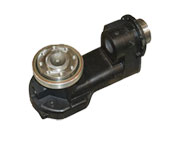
On various kinds of cars, the accelerator pedal motion is communicated via the throttle cable. This activates the throttle linkages which in turn move the throttle plate. In automobiles with electronic throttle control, also known as "drive-by-wire" an electric motor regulates the throttle linkages. The accelerator pedal is attached to a sensor and not to the throttle body. This particular sensor sends the pedal position to the ECU or Engine Control Unit. The ECU is responsible for determining the throttle opening based on accelerator pedal position along with inputs from various engine sensors. The throttle body has a throttle position sensor. The throttle cable is attached to the black portion on the left hand side which is curved in design. The copper coil located near this is what returns the throttle body to its idle position as soon as the pedal is released.
The throttle plate turns inside the throttle body each time the operator presses on the accelerator pedal. This opens the throttle passage and permits a lot more air to be able to flow into the intake manifold. Normally, an airflow sensor measures this alteration and communicates with the ECU. In response, the Engine Control Unit then increases the amount of fluid being sent to the fuel injectors in order to produce the desired air-fuel ratio. Often a throttle position sensor or likewise called TPS is fixed to the shaft of the throttle plate to provide the ECU with information on whether the throttle is in the wide-open throttle or "WOT" position, the idle position or anywhere in between these two extremes.
So as to control the lowest amount of air flow while idling, several throttle bodies could include valves and adjustments. Even in units that are not "drive-by-wire" there will normally be a small electric motor driven valve, the Idle Air Control Valve or also called IACV that the ECU utilizes in order to control the amount of air that could bypass the main throttle opening.
In many vehicles it is common for them to contain a single throttle body. To be able to improve throttle response, more than one could be utilized and attached together by linkages. High performance cars like the BMW M1, together with high performance motorcycles like the Suzuki Hayabusa have a separate throttle body for each and every cylinder. These models are referred to as ITBs or likewise known as "individual throttle bodies."
The throttle body and the carburator in a non-injected engine are somewhat the same. The carburator combines the functionality of both the throttle body and the fuel injectors together. They are able to regulate the amount of air flow and blend the fuel and air together. Vehicles that have throttle body injection, that is known as CFI by Ford and TBI by GM, locate the fuel injectors in the throttle body. This enables an older engine the possibility to be converted from carburetor to fuel injection without really altering the engine design.
Click to Download the PDF
Forklift Parts

TOLL FREE: 1-888-695-7994
Inglewood, California
forkliftpartsinglewood.com
Email Us
About Us