

SCHOLARSHIP APPLICATION: (Deadline: APRIL 30th, 2027)
Please ensure all fields are filled in completely.To view previous winner: Click Here
(IF YOU HAVE ANY QUESTIONS, PLEASE EMAIL THE PROGRAM ADMINISTRATOR AT RYAN@STUDENTSCHOLARSHIPS.ORG)
Forklift Controller
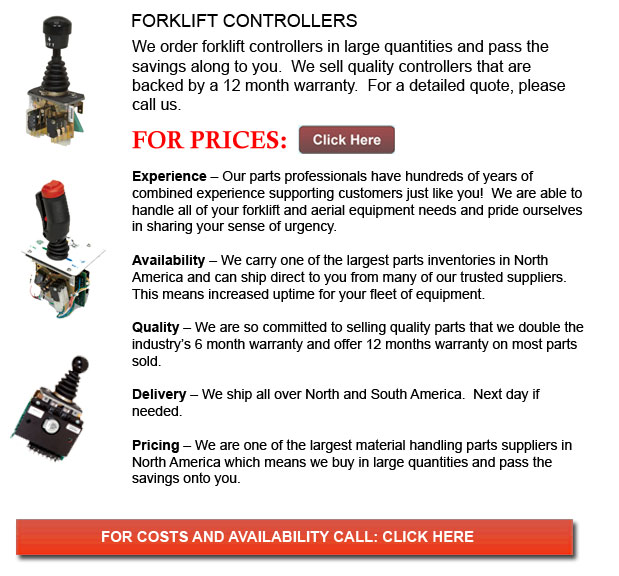

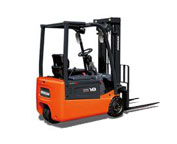
Controllers for Forklift - Lift trucks are accessible in several load capacities and different models. Nearly all forklifts in a standard warehouse setting have load capacities between one to five tons. Larger scale models are utilized for heavier loads, like loading shipping containers, may have up to fifty tons lift capacity.
The operator could make use of a control in order to raise and lower the forks, which are also referred to as "tines or forks." The operator could even tilt the mast to be able to compensate for a heavy load's tendency to tilt the forks downward to the ground. Tilt provides an ability to operate on bumpy surface as well. There are yearly competitions intended for skilled lift truck operators to contend in timed challenges and obstacle courses at local forklift rodeo events.
Lift trucks are safety rated for cargo at a specific maximum weight and a specific forward center of gravity. This essential information is provided by the maker and placed on a nameplate. It is essential loads do not exceed these details. It is illegal in many jurisdictions to tamper with or take out the nameplate without getting consent from the lift truck manufacturer.
The majority of lift trucks have rear-wheel steering in order to enhance maneuverability. This is specifically effective within confined areas and tight cornering areas. This type of steering varies rather a little from a driver's initial experience together with different motor vehicles. As there is no caster action while steering, it is no essential to utilize steering force to be able to maintain a constant rate of turn.
Unsteadiness is one more unique characteristic of forklift use. A continuously varying centre of gravity happens with each movement of the load between the lift truck and the load and they need to be considered a unit during utilization. A lift truck with a raised load has gravitational and centrifugal forces which can converge to result in a disastrous tipping mishap. So as to avoid this possibility, a forklift must never negotiate a turn at speed with its load elevated.
Lift trucks are carefully built with a load limit meant for the blades. This limit is lowered with undercutting of the load, that means the load does not butt against the fork "L," and likewise lowers with blade elevation. Generally, a loading plate to consult for loading reference is positioned on the lift truck. It is unsafe to utilize a forklift as a personnel lift without first fitting it with certain safety tools like for instance a "cage" or "cherry picker."
Forklift use in distribution centers and warehouses
Important for any distribution center or warehouse, the forklift must have a safe setting in which to accommodate their efficient and safe movement. With Drive-In/Drive-Thru Racking, a forklift should go in a storage bay that is multiple pallet positions deep to set down or obtain a pallet. Operators are usually guided into the bay through rails on the floor and the pallet is positioned on cantilevered arms or rails. These confined manoeuvres need expert operators to carry out the task safely and efficiently. Since every pallet requires the truck to enter the storage structure, damage done here is more frequent than with different kinds of storage. When designing a drive-in system, considering the dimensions of the fork truck, together with overall width and mast width, must be well thought out so as to be sure all aspects of a safe and effective storage facility.
Click to Download the PDF
Forklift Parts

TOLL FREE: 1-888-695-7994
Inglewood, California
forkliftpartsinglewood.com
Email Us
About Us