

SCHOLARSHIP APPLICATION: (Deadline: APRIL 30th, 2027)
Please ensure all fields are filled in completely.To view previous winner: Click Here
(IF YOU HAVE ANY QUESTIONS, PLEASE EMAIL THE PROGRAM ADMINISTRATOR AT RYAN@STUDENTSCHOLARSHIPS.ORG)
Starters for Forklift
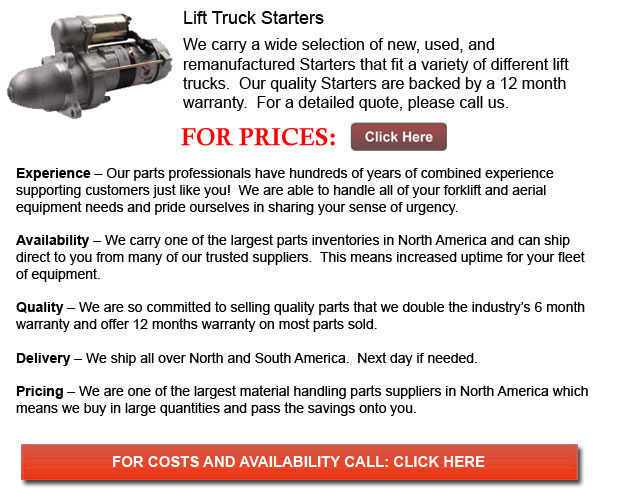

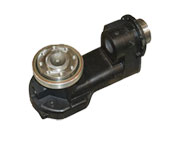
Starter for Forklifts - Today's starter motor is typically a permanent-magnet composition or a series-parallel wound direct current electrical motor along with a starter solenoid installed on it. When current from the starting battery is applied to the solenoid, basically through a key-operated switch, the solenoid engages a lever that pushes out the drive pinion that is situated on the driveshaft and meshes the pinion using the starter ring gear which is seen on the flywheel of the engine.
The solenoid closes the high-current contacts for the starter motor, which begins to turn. When the engine starts, the key operated switch is opened and a spring inside the solenoid assembly pulls the pinion gear away from the ring gear. This particular action causes the starter motor to stop. The starter's pinion is clutched to its driveshaft by means of an overrunning clutch. This allows the pinion to transmit drive in only a single direction. Drive is transmitted in this way through the pinion to the flywheel ring gear. The pinion remains engaged, for instance as the driver fails to release the key when the engine starts or if the solenoid remains engaged as there is a short. This causes the pinion to spin separately of its driveshaft.
The actions mentioned above would stop the engine from driving the starter. This vital step stops the starter from spinning really fast that it could fly apart. Unless adjustments were done, the sprag clutch arrangement will prevent using the starter as a generator if it was made use of in the hybrid scheme discussed earlier. Usually a regular starter motor is meant for intermittent utilization which will prevent it being utilized as a generator.
Therefore, the electrical components are intended to be able to work for roughly under thirty seconds to be able to avoid overheating. The overheating results from too slow dissipation of heat due to ohmic losses. The electrical components are intended to save cost and weight. This is the reason most owner's instruction manuals intended for vehicles suggest the operator to stop for a minimum of ten seconds right after each ten or fifteen seconds of cranking the engine, whenever trying to start an engine which does not turn over at once.
During the early 1960s, this overrunning-clutch pinion arrangement was phased onto the market. Previous to that time, a Bendix drive was used. The Bendix system works by placing the starter drive pinion on a helically cut driveshaft. As soon as the starter motor begins turning, the inertia of the drive pinion assembly allows it to ride forward on the helix, therefore engaging with the ring gear. Once the engine starts, the backdrive caused from the ring gear enables the pinion to go beyond the rotating speed of the starter. At this point, the drive pinion is forced back down the helical shaft and therefore out of mesh with the ring gear.
During the 1930s, an intermediate development between the Bendix drive was developed. The overrunning-clutch design that was developed and introduced during the 1960s was the Bendix Folo-Thru drive. The Folo-Thru drive has a latching mechanism along with a set of flyweights within the body of the drive unit. This was better because the average Bendix drive utilized to disengage from the ring as soon as the engine fired, though it did not stay running.
As soon as the starter motor is engaged and starts turning, the drive unit is forced forward on the helical shaft by inertia. It then becomes latched into the engaged position. Once the drive unit is spun at a speed higher than what is achieved by the starter motor itself, like for example it is backdriven by the running engine, and then the flyweights pull outward in a radial manner. This releases the latch and enables the overdriven drive unit to become spun out of engagement, thus unwanted starter disengagement can be avoided prior to a successful engine start.
Click to Download the PDF
Forklift Parts

TOLL FREE: 1-888-695-7994
Inglewood, California
forkliftpartsinglewood.com
Email Us
About Us